ECU Cloning
Transfer original ECU data to a compatible donor ECU where the original data can be read safely.
ECU SOFTWARE
ECU cloning, ECU data transfer, ECU repair and selected software solutions including DPF, EGR, AdBlue and flap-related support where applicable and legally permitted.
ECU DATA WORK
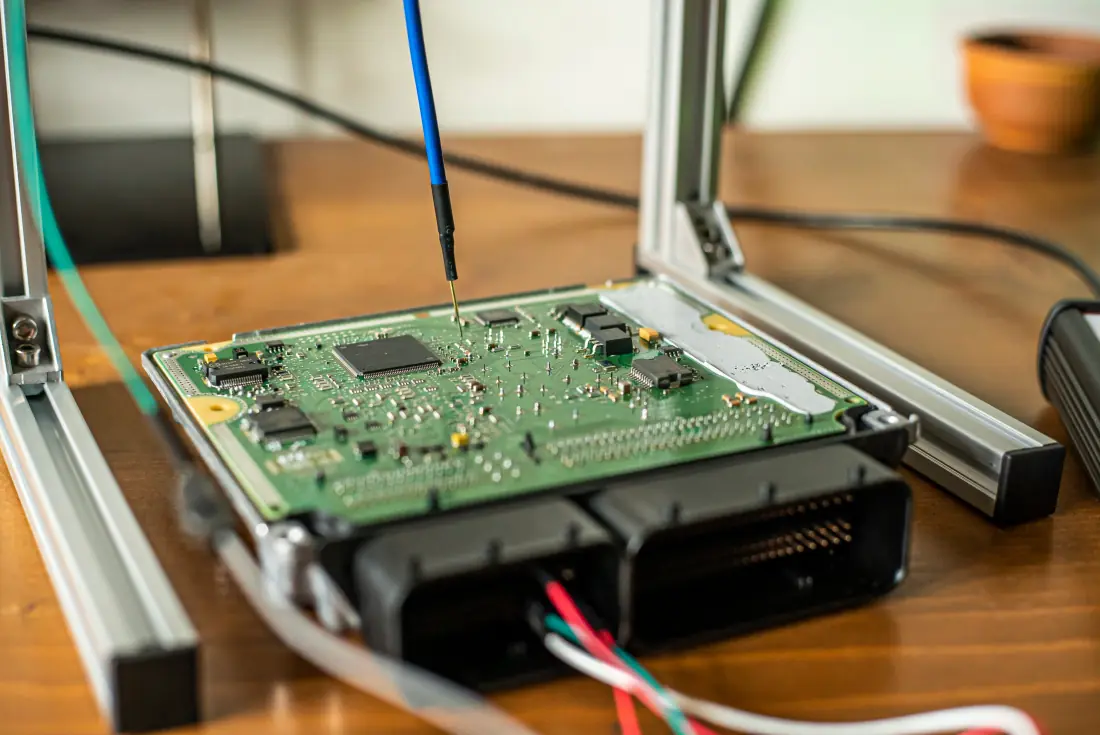
ECU cloning is a technical vehicle electronics process used when data from an original engine control unit needs to be transferred to a compatible donor ECU. Modern ECUs store more than engine maps. They can contain immobiliser data, coding, configuration, calibration, EEPROM data, flash data and vehicle identity information. A used ECU may physically fit the vehicle but still not work unless the correct data is transferred.
GsmHelp Electronics Workshop supports selected ECU cloning, ECU repair, ECU data transfer and ECU software support across Evesham and Worcestershire. The work may involve donor ECU preparation, immobiliser data transfer, EEPROM reading, flash reading, ECU bench programming, software recovery and hardware inspection. The correct method depends on the ECU manufacturer, processor, memory layout, communication status and fault condition.
ECU cloning is often requested after water damage, internal failure, burnt ECU tracks, failed programming or a no communication fault. In some cases the original ECU can still be read on the bench even if it no longer works correctly in the vehicle. In other cases, corrosion, processor failure or memory damage can make data recovery difficult or impossible. Diagnosis is important before a donor ECU is purchased or fitted.
Bench programming allows an ECU to be powered and accessed away from the vehicle. EEPROM reading may recover immobiliser and configuration data. Flash reading may preserve software and calibration areas. Hardware inspection can identify burnt components, water ingress, damaged pins, failed power supply areas or CAN communication faults. Software recovery may be possible after interrupted programming, corrupted files or an ECU that has stopped responding normally.
Donor ECU preparation is a critical part of the process. The replacement ECU must be checked for part number compatibility, hardware family, connector layout, processor type and software suitability. A donor that looks similar externally may still contain a different memory structure or calibration version. This is why the original ECU, donor ECU and vehicle symptoms should be reviewed together before any data transfer is carried out. Careful preparation also reduces repeat labour, avoids unnecessary immobiliser pairing attempts and helps protect original vehicle data for future diagnostics.
ECU data transfer can involve several different memory areas. Immobiliser data may be stored separately from the main software. Coding and configuration may be held in EEPROM, while engine software and calibration can be held in flash memory. Some ECUs allow safe bench access through connector pins, while others require direct programmer access. The aim is to preserve the vehicle-specific data and avoid unnecessary vehicle-side programming where a correct clone can be prepared.
For legal and responsible operation, software requests involving DPF, EGR, AdBlue, flap or swirl flap systems are assessed carefully. GsmHelp Electronics Workshop does not promote emissions removal for road vehicles. Any emissions-related request must be declared, documented, lawful for the intended use and subject to diagnosis. Related support may include Immobiliser Repair, Module Cloning and Contact Us.
AVAILABLE SERVICES
Transfer original ECU data to a compatible donor ECU where the original data can be read safely.
Move immobiliser, coding, EEPROM, flash and configuration data where supported by the ECU type.
Assess selected ECU hardware faults, water damage, burnt tracks and communication problems.
Use bench power, programmers and direct memory access when vehicle communication is not suitable.
Transfer security-related data for compatible ECU replacement and no-start fault repair.
Recover or restore ECU software where failed programming or corrupted data is suspected.
Check donor compatibility and prepare used ECUs before vehicle-side testing.
Investigate power, CAN, hardware and processor faults when the ECU does not respond.
LEGAL SOFTWARE SUPPORT
GsmHelp Electronics Workshop can provide selected ECU software support for DPF, EGR, AdBlue and flap-related faults where applicable and legally permitted. Emissions-related software work must not be used to make a road vehicle non-compliant with UK road use requirements.
Requests are assessed subject to diagnosis, customer declaration and intended use. Where applicable, work may be limited to off-road, motorsport, export, testing, agricultural or other lawful non-public-road use. Customer declaration is required before any DPF, EGR, AdBlue, flap or swirl flap related software work is considered.
Selected diagnostic and file support for DPF-related faults, subject to legal use and declaration.
EGR-related ECU software support where legally permitted and supported by the ECU file.
AdBlue diagnostic and software support for selected systems, subject to vehicle use and legality.
Flap and swirl flap software requests assessed only where applicable, documented and lawful.
Create a backup of the original ECU file before supported software work is carried out.
Support for corrupted, failed or incomplete ECU software programming where repair is possible.
FAULT TYPES
PROCESS
The ECU part number, manufacturer, processor type and vehicle application are checked first.
Symptoms, communication status, power supply and visible damage are assessed before programming.
EEPROM, flash or processor data is read using the safest supported method.
A compatible replacement ECU is checked and prepared for data transfer.
Original data is transferred to the donor ECU where technically possible.
Power, communication and data integrity are checked on the bench where supported.
Final operation may require vehicle-side checks, coding or diagnostic verification.
WORKSHOP EXAMPLES
Problem: The original ECU had intermittent communication and the vehicle would not start reliably.
Diagnosis: Part numbers, communication behaviour and readable memory areas were checked before donor preparation.
Repair Route: Original ECU data was extracted and transferred to a compatible donor ECU where supported.
Result: The replacement ECU could be prepared with the correct vehicle data instead of fitting an unmatched used ECU.
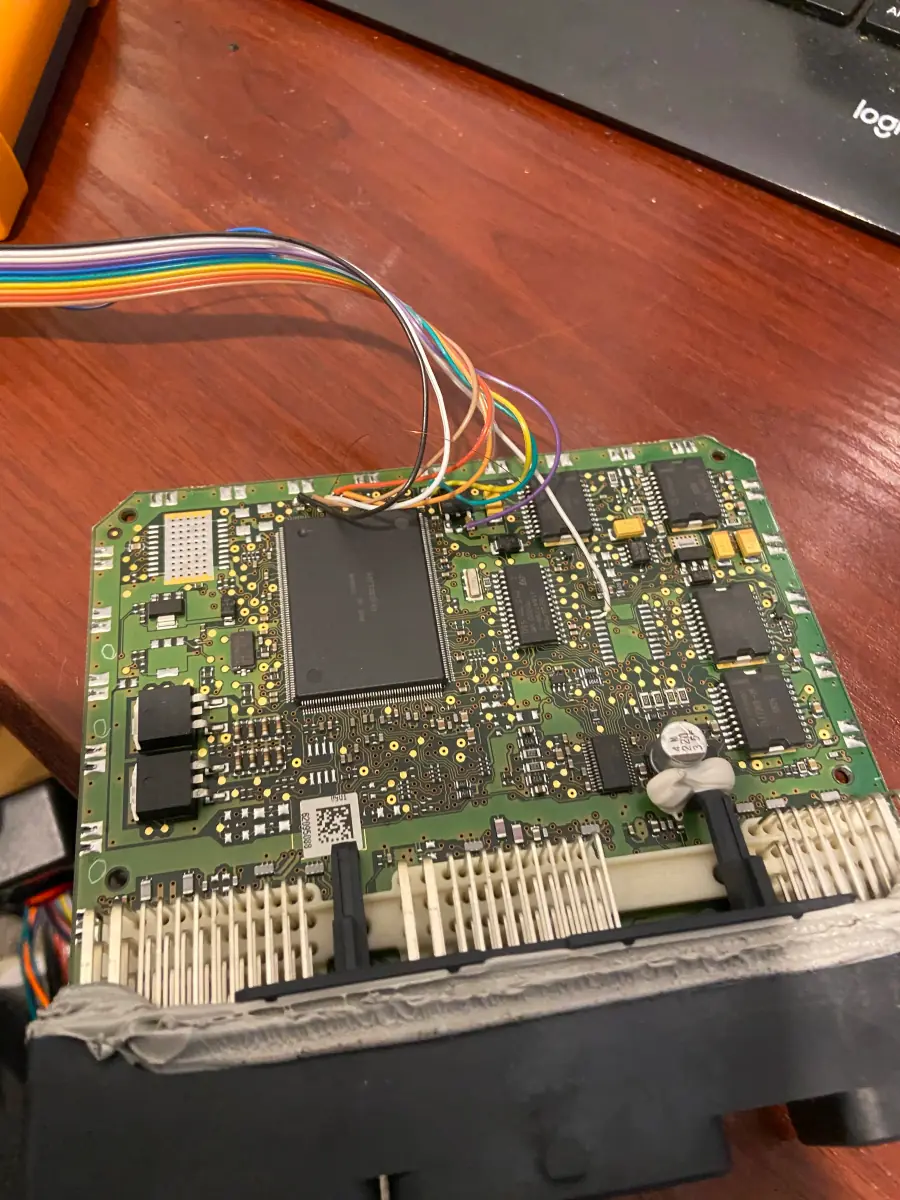
Problem: A programming event failed and the ECU no longer responded normally in the vehicle.
Diagnosis: Bench power, communication and direct data access were tested to confirm whether recovery was possible.
Repair Route: The ECU file was backed up and software recovery was attempted using supported bench programming methods.
Result: A clear repair route was established before further vehicle-side programming or replacement was attempted.
LEGAL DECLARATION
DPF, EGR, AdBlue or emissions-related software changes must not be used to make a road vehicle non-compliant. If the requested work involves disabling, removing or bypassing emissions-related systems, the customer must declare that the vehicle will not be used on public roads unless restored to road-legal condition.
For any power increase, remap or performance modification, the customer is responsible for informing DVLA where required and informing their insurance provider.
The declaration form exists to protect the customer, the workshop and the vehicle record. It confirms who owns or controls the vehicle, what work is being requested, what parts have been supplied and whether the request relates to emissions systems, performance changes, off-road use, export, motorsport or testing. If the request is unclear, unsupported by documents or not legally acceptable, the work can be refused.
Customers should complete the form before sending an ECU or requesting software work. If the ECU is posted, include the signed declaration, V5C copy, photo ID copy and the ECU or module being tested. The details on the V5C and ID help confirm lawful authority to request immobiliser, ECU cloning or software-related work. This is especially important when the ECU contains vehicle security data or when a donor module is being prepared.
FAQ
ECU cloning is the process of reading data from an original ECU and transferring suitable data to a compatible donor ECU.
A used ECU can often be cloned when the original ECU data is readable and the donor ECU is compatible.
ECU cloning can help with immobiliser mismatch when the correct immobiliser and vehicle data can be transferred.
Water damaged ECUs can be assessed, but repair depends on corrosion, processor condition and whether data can still be recovered.
Yes. Selected ECU software support is available for diagnostics, recovery, backups and lawful file requests.
Selected DPF, EGR and AdBlue fault support may be available where applicable, declared and legally permitted.
Emissions-related disabling, removal or bypass software must not be used to make a road vehicle non-compliant with UK road use requirements.
Yes. The customer is responsible for informing DVLA where required and declaring performance changes to their insurer.
V5C and ID help verify ownership, prevent fraud and support legal compliance for ECU and immobiliser-related work.
Yes. GsmHelp Electronics Workshop can refuse any software request that is unclear, unsupported, unlawful or not properly declared.