BCM Cloning
Body control module cloning for selected BCM units where original data must be transferred to a compatible donor.
VEHICLE MODULE CLONING
Professional automotive module cloning and data transfer support for selected vehicle electronic control units, including body control modules, engine control modules and transmission control modules.
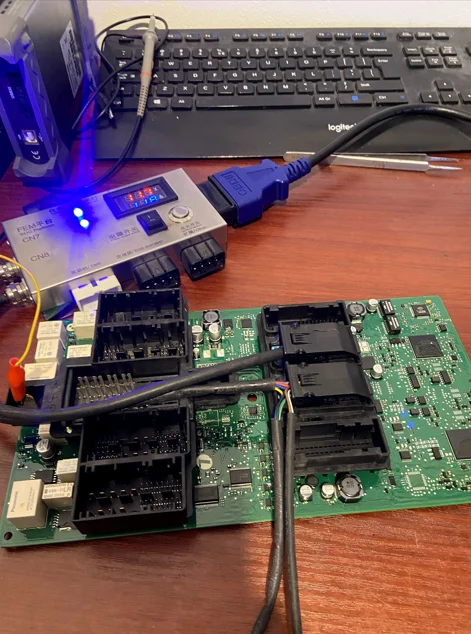
Automotive module cloning service image showing electronic control module bench programming and data transfer work.
DATA TRANSFER
Module cloning is a specialist vehicle electronics process used when data from an original electronic control module needs to be transferred to a compatible replacement unit. Modern vehicles use many interconnected modules, including BCM, BSI, ECU, ECM and TCM control units. These modules do not only operate hardware; they often store coding, immobiliser information, configuration, software data, calibration and identity details that allow the vehicle network to recognise the module correctly.
Cloning may be needed when an original module is water damaged, burnt, corrupted, no longer communicating, affected by failed programming or not reliable enough to repair directly. A used replacement module may physically fit the vehicle but still not work because the data inside does not match the vehicle. In those cases, automotive module cloning can sometimes transfer the important data from the original unit to a suitable donor so the replacement behaves correctly in the vehicle system.
Professional module cloning is not the same as simply fitting a second-hand module. The original and donor units must be identified, part numbers and hardware versions must be checked, and the module condition must be assessed. Data may need to be read through EEPROM, MCU, flash memory or processor access depending on the control unit design. Some modules can be read through connector pins, while others require bench programming, direct memory access or more detailed electronics work.
BCM cloning and BSI cloning are commonly required when body control functions fail, central locking stops working, lighting logic is corrupted, interior electronics behave incorrectly, or a replacement body module is not accepted. ECU cloning and ECM cloning can be relevant for engine control unit failure, no-start faults, immobiliser mismatch and used module replacement. TCM cloning can be needed when a gearbox control module is replaced and vehicle-specific data must be retained for correct shift behaviour and communication.
Module data transfer can include immobiliser data, coding, configuration, VIN-related information, synchronisation data and software areas, depending on the module. Some data is essential for security matching, while other data controls comfort functions, dashboard communication, engine control, transmission behaviour or body electronics. Because every module type is different, the correct route depends on the exact hardware, memory type, failure mode and donor compatibility.
GsmHelp Electronics Workshop provides vehicle module cloning, electronic control module cloning, automotive module cloning and vehicle electronics repair support for selected units. The work is handled as technical electronics repair, using bench programming, EEPROM programmer and MCU programmer methods, module recovery, flash reading, coding verification and vehicle electronics diagnostics where applicable.
Used module replacement is often the trigger for cloning work. A customer may buy a donor BCM, ECU or TCM, but the vehicle still will not start, will not communicate, or will not accept the replacement because the donor is blank or configured for another vehicle. Cloning can help preserve the original data and reduce the risk of fitting the wrong module. It can also be useful when the original module is partially damaged but still readable enough for data extraction.
Water damaged modules, burnt control units, no communication modules, corrupted software and failed programming events are common reasons for cloning enquiries. In some cases, the original module can be repaired. In others, the original data must be read and transferred to a donor. For immobiliser-related modules, security data transfer must be handled carefully and only where technically supported.
Bench programming allows modules to be powered, tested and accessed away from the vehicle when connector communication is unreliable. EEPROM reading can recover configuration stored in non-volatile memory chips. MCU reading may be required when the processor or internal flash holds critical identity data. Flash reading can preserve software areas needed for donor preparation. Coding verification helps confirm whether transferred data is consistent before the module is returned or installed.
Vehicle electronics diagnostics still matter during cloning work because a module fault is not always isolated to the control unit itself. Wiring, power supply, gateway communication, immobiliser status and related modules can influence symptoms. A cloning specialist must distinguish between a module that needs data transfer and a vehicle that has a wider network fault. This reduces wasted donor purchases and repeated programming attempts.
Dashboard module cloning and instrument cluster cloning may be relevant when display modules store mileage, configuration or vehicle identity data, subject to legal and technical suitability. Gateway module cloning can be needed when network routing and identity data must match the vehicle architecture. Comfort module cloning may apply to convenience systems integrated with body electronics. Agricultural electronic modules can also require data transfer when machine displays or controllers fail in harsh working environments.
For related work, see BMW FRM3 Repair, Dashboard & Instrument Cluster Repair, Car Key Programming, Immobiliser Repair, or Contact Us.
MODULE SUPPORT
Body control module cloning for selected BCM units where original data must be transferred to a compatible donor.
BSI cloning and configuration transfer support for selected body systems and integrated control units.
Engine control module cloning for selected ECU and ECM units where immobiliser and calibration data can be transferred.
Transmission control module data transfer support for suitable gearbox control modules and donor units.
Dashboard and display module data support where replacement or recovery requires original data handling.
Instrument cluster data transfer for selected clusters, subject to legal and technical suitability.
Immobiliser-related data handling for selected modules where key and security matching is required.
FRM data recovery and module repair support linked to BMW footwell module and lighting control faults.
Gateway control module cloning where network identity and configuration data require transfer.
Comfort and convenience module data transfer for selected body electronics systems.
COMMON PROBLEMS
Recover readable data where possible and transfer it to a compatible replacement unit.
Assess hardware damage and attempt EEPROM, MCU or flash data extraction if the memory area is recoverable.
Use bench testing and programming methods when OBD communication is not available.
Check whether software, EEPROM or configuration data can be repaired, recovered or transferred.
Assess incomplete programming events and restore usable data where supported.
Investigate immobiliser data, ECU matching and module communication before replacement.
Clone original data to a suitable donor so the replacement module matches the vehicle.
Transfer immobiliser and vehicle identity data where the module type supports it.
Recover or transfer coding/configuration data from the original module where possible.
Verify donor suitability before data transfer to avoid repeating the same fault.
WORKSHOP EXAMPLES
Automotive module cloning service image showing electronic control module bench programming and data transfer work.
Problem: Original module suffered communication and data access issues.
Test: Module was identified and checked with bench power, programming and diagnostic methods.
Solution: Readable memory areas were assessed and data transfer options were confirmed.
Result: A suitable repair path was selected before fitting or coding decisions were made.
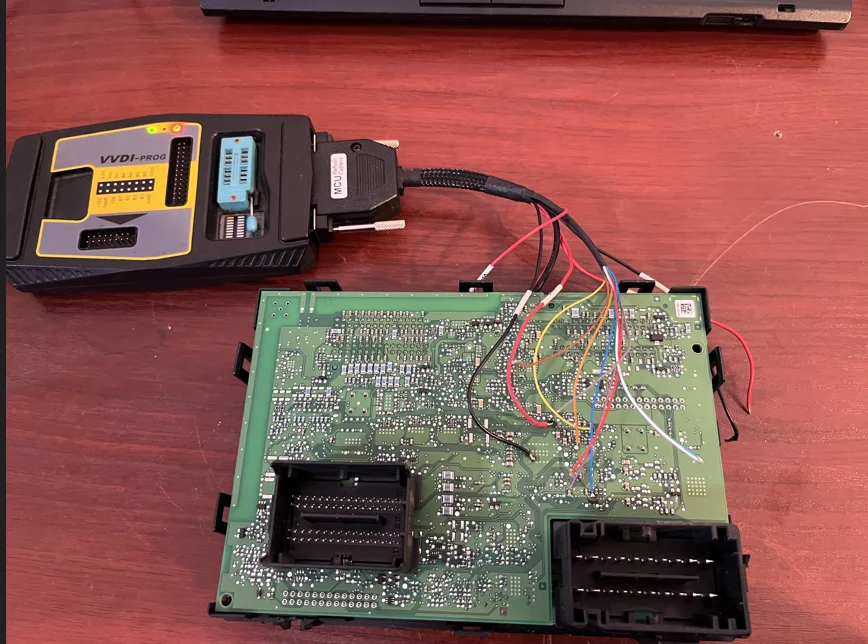
Workshop example of BCM cloning and BSI module data transfer for vehicle electronics repair.
Problem: Used replacement body module was not accepted by the vehicle.
Test: Original and donor module identifiers, memory data and compatibility were checked.
Solution: Vehicle-specific data was transferred where technically supported.
Result: The donor module could be prepared to match the vehicle system more accurately.
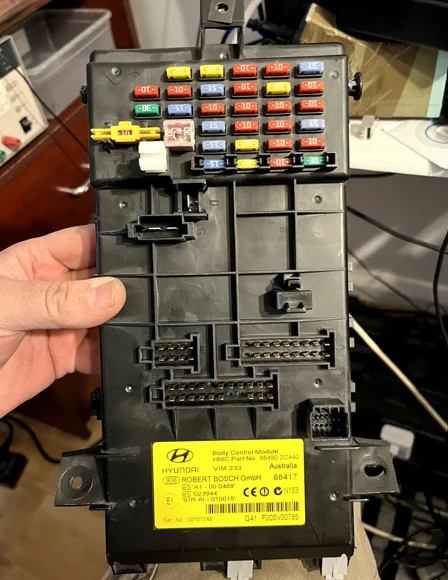
ECU cloning and ECM module cloning workshop image for automotive electronic control unit data transfer.
Problem: Engine control module required replacement due to internal electronics failure.
Test: ECU hardware and memory access were assessed on the bench.
Solution: ECU cloning and immobiliser data transfer options were reviewed.
Result: The replacement route avoided unnecessary guesswork around security matching.
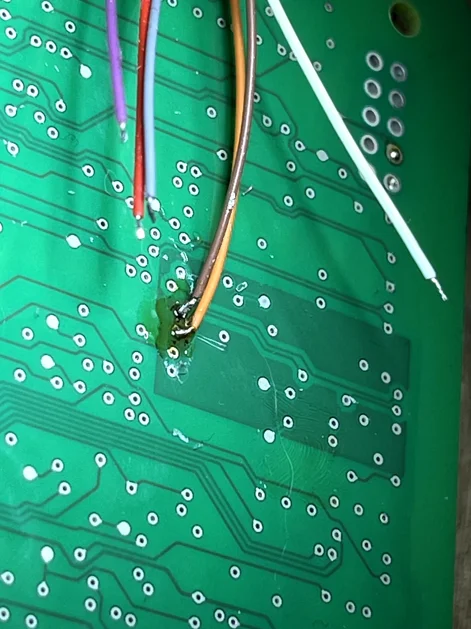
EEPROM programmer and MCU programmer workflow image for module recovery, flash reading and data transfer.
Problem: Module data was not available through normal diagnostic communication.
Test: EEPROM and MCU read procedures were considered for direct data access.
Solution: Specialist programmer workflow was used where the module type allowed safe reading.
Result: Critical data could be preserved for repair or donor preparation.
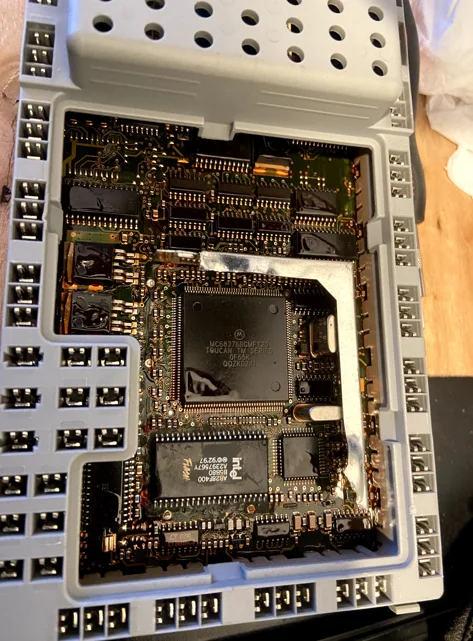
Vehicle control module bench testing image for verifying cloned module data, coding and communication.
Problem: Cloned module needed checking before return or vehicle-side testing.
Test: Power, communication and data integrity were assessed after transfer.
Solution: Coding verification and bench testing were carried out where available.
Result: The module could be supplied with clearer confidence in the completed data work.
EQUIPMENT & PROCESS
Module cloning uses bench programming, EEPROM programmer and MCU programmer tools, diagnostic equipment, module recovery methods, flash reading and coding verification where supported.
The control unit is identified by part number, hardware version, memory type and vehicle application before any cloning work begins.
Symptoms, communication status, water damage, burn marks and previous programming attempts are reviewed to confirm whether cloning is appropriate.
Readable data is extracted from the original module using diagnostic access, bench power or direct memory reading where supported.
EEPROM programmer and MCU programmer workflows are used when connector communication is unavailable or incomplete.
A compatible donor module is checked for hardware match, memory layout and suitability before transfer.
Vehicle-specific coding, configuration, immobiliser and software data are transferred to the donor where technically possible.
Bench testing, communication checks and coding verification are completed before the module is returned or refitted.
VEHICLE SYSTEMS
Module cloning support may be available for selected body control systems, engine control systems, transmission systems, immobiliser systems, dashboard systems, instrument clusters, comfort modules, gateway modules and agricultural electronic modules.
WHY CHOOSE US
Module cloning is handled as automotive electronics work, not generic parts fitting.
Specialist programmers support memory reading, flash recovery and data transfer on selected modules.
Bench methods are used when OBD access is limited, corrupted or unavailable.
Both circuit-level faults and software corruption are considered before cloning is recommended.
Communication, power, processor and memory faults are assessed before donor preparation.
Work is based on practical module recovery, cloning and repair cases from customer vehicles.
You receive straightforward advice on compatibility, risk and realistic outcomes.
Workshop support is available across Evesham and Worcestershire with sensible turnaround.
LOCAL COVERAGE
Module cloning and vehicle electronics support is available across Evesham, Pershore, Worcester, Redditch, Droitwich Spa, Bromsgrove, Kidderminster, Cheltenham, Tewkesbury, Stratford-upon-Avon, Alcester, Broadway, Honeybourne and Badsey.
FAQ
Vehicle module cloning is the process of reading data from an original electronic control module and transferring suitable data to a compatible donor module.
A used BCM can sometimes be cloned if the original data can be read and the donor module is compatible with the vehicle system.
Selected BSI modules can be assessed for cloning, data transfer or repair depending on hardware condition and memory access.
Selected ECU and ECM modules can be cloned where the required data can be read and safely transferred to a suitable replacement.
TCM cloning may be possible for selected gearbox modules where donor compatibility and data access are suitable.
Some cloned modules may be prepared to match the vehicle, while others may still need coding, calibration or vehicle-side verification.
A water damaged module can only be cloned if the critical memory or processor data can still be recovered. Severe corrosion may prevent cloning.
Yes. No communication modules can often be assessed on the bench using EEPROM, MCU, flash and power testing methods.
Cloning can help with immobiliser mismatch when the correct security data can be transferred to a compatible replacement module.
Selected agricultural electronic modules can be assessed for repair, data transfer or cloning depending on module type and condition.
MODULE CLONING
Contact GsmHelp Electronics Workshop for professional BCM, BSI, ECU, ECM and TCM module cloning support across Evesham and Worcestershire.